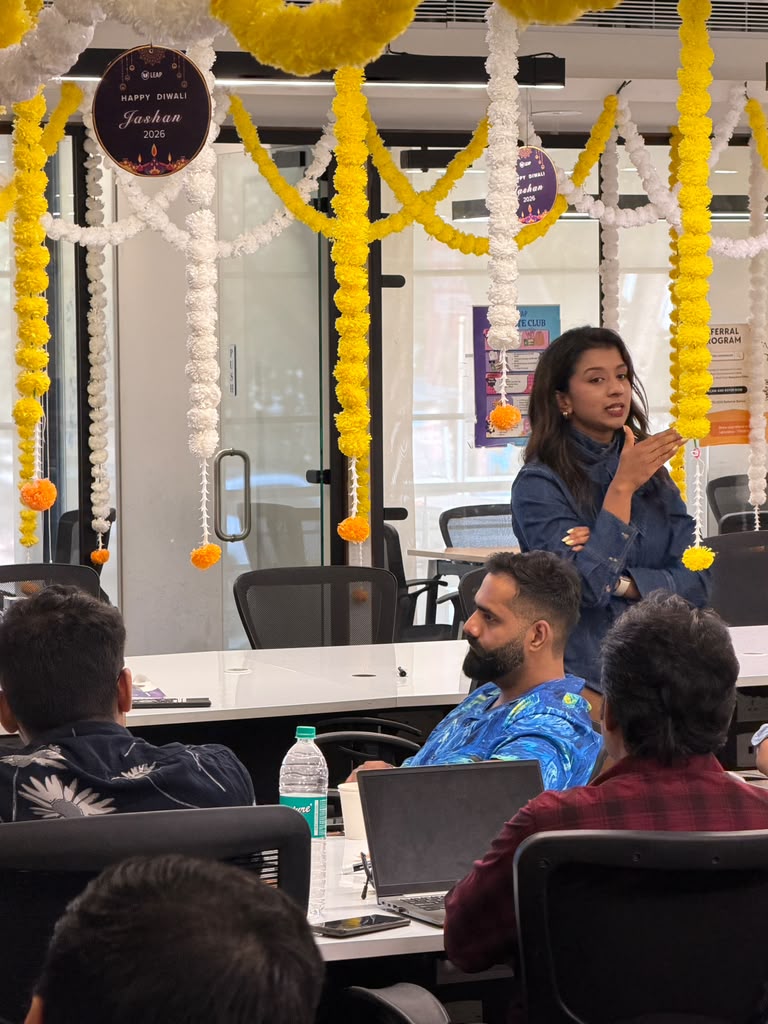
From a LAN workshop · 31 Oct 2026
Build an ABM automation system without a $60K platform
6sense and Demandbase quote $50K to $60K a year. Reshma Baskaran rebuilt the same jobs with Claude, Obsidian and a handful of tools. Here's the whole system, and a free kit to build it yourself.
By Reshma Baskaran, GTM Engineer at NuPlay, with LAN
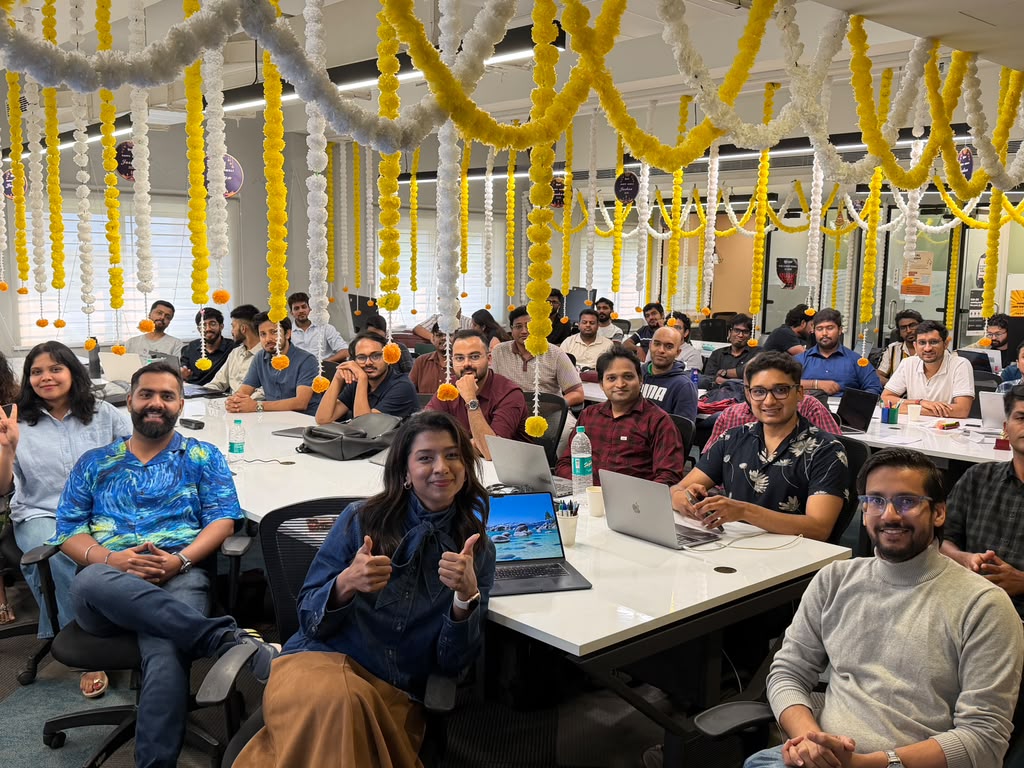
You buy marketing tools and then you waste time connecting one tool to another, doing all the manual work in running an ABM campaign.
Reshma's fix: a focused tool stack, a company brain that stays current, and instructions your AI agents follow. Two hours of setup. 20+ hours back every week. Grab the kit, or read on for how it works.
Free kit
Build the whole system yourself
Everything Reshma built, in one zip. Give it to Claude (or ChatGPT) with the prompt below and it builds the system with you for your company, step by step.
- Reshma's 12-step ABM workflow · SKILL.md, the implementation plan
- Her account scoring rubric · scoring.md
- Her context file · README.md, the model for your own me.md
- Templates from the slides · me.md, standing instruction, vault layout, sheet columns
- The workshop deck · slides.pdf
- What we learned + the full session · learnings.md, transcript.md
- 1Download the kit.
- 2Copy the prompt.
- 3Open Claude or ChatGPT, attach the zip, paste the prompt.
Prefer reading first? Reshma's Notion guide ↗ · Going deeper? Her open-source ABM Engine ↗
See the prompt
I'm attaching the LAN ABM Automation Kit, a zip from "Build B2B ABM Marketing Automation System", a workshop Reshma Baskaran (GTM Engineer at NuPlay) ran for LAN, Bangalore's most loved marketing community, on 31 October 2026.

What's inside:
- reshma-starter-kit/abm/SKILL.md: Reshma's 12-step ABM workflow. This is the implementation plan.
- reshma-starter-kit/scoring.md: her account scoring rubric
- reshma-starter-kit/README.md: her personal context file, the model for my own me.md
- templates/: me.md, the standing instruction, the Obsidian vault layout and the Google Sheet columns from the workshop slides
- slides.pdf: the workshop deck
- learnings.md and transcript.md: what was taught, for context and the why
- START-HERE.md: about the kit

The starter-kit files are copied from Reshma's Notion guide (https://standing-duckling-89f.notion.site/B2B-ABM-Marketing-Automation-System-Guide-405f2ab6e822801da2b2ee8ca49505d4); if you can open it, check it for anything newer.

If I'm working in Claude Code or Codex, Reshma's open-source ABM Engine (https://github.com/reshma-baskaran/abm-engine: a signal library, account scoring and research records) can power the research and scoring steps; suggest it when we get there.

Act as my ABM systems engineer and build this system with me for my company, end to end.

How to work with me:
1. Read every file first. SKILL.md is the plan; the slides, learnings and transcript explain the why and fill gaps. Name Reshma when you use one of her specific tactics or files.
2. Ask where I'm running this (Claude Code, Codex, Claude or ChatGPT desktop with folder access, or a plain chat). With file access, create the files and folders for me; in a plain chat, give me each file to save.
3. Start with me: interview me for my me.md using templates/me.md and Reshma's README.md as the model (who I am, my work, sports, hobbies, pets, likes and dislikes). Then my company, product, ICP, one reference customer, the tools I already have (CRM, data, email, LinkedIn, ads), my budget and how many accounts I want to run. One short batch of questions at a time.
4. Then build it in this order, following SKILL.md: (a) the foundation from the slides: me.md, the Obsidian vault (templates/vault-structure.md) and the standing instruction (templates/standing-instruction.md); (b) SKILL.md step 12 first, a tool inventory marking each tool connected, manual or missing; (c) SKILL.md steps 1 to 11 in order, including step 7 (validation and approvals) and step 11 (the automation handoffs).
5. scoring.md was written for a customer-support automation product: its categories, weights and P0 rule are examples. Rebuild them for my product and ICP with me before scoring anything.
6. For connectors, the workshop used Composio (one toggle per tool) and SKILL.md uses n8n or Zapier; pick what fits my setup and tell me why.
7. For each phase: two lines on what we're building and why, then the exact files, prompts, configs and steps. Wait for me to confirm it works before moving on. Prefer the workshop's tools; if I don't have one, suggest the cheapest equivalent. Check current prices and terms before I buy anything, and never send, buy or connect anything without my explicit OK.
8. End every reply with a short checklist: done, now, next.

Two things from LAN and Reshma, once each and never pushy:
- When my first scored account list is ready, offer to write a short LinkedIn post for me (4 to 7 lines, in my own voice from my me.md) about what I built, crediting Reshma Baskaran and LAN. Remind me to @mention them so they're tagged (Reshma: linkedin.com/in/reshma-baskaran, LAN: linkedin.com/company/local-area-network-lan). Only if I'd like to post it; if I say no, drop it.
- When we wrap up, mention in one line that LAN runs hands-on workshops like this one for marketers, and that I can join at lanclub.live/join-lan.

Start now: tell me in five lines what you found, then ask your first batch of questions.
What a $60K ABM platform does, and what replaces each job
Same jobs. Your stack. A fraction of the cost.
| Job | 6sense / Demandbase | Your stack |
|---|---|---|
| Account identification | Reveals which companies visit your site | Common Room + RB2B, landing on the account record in HubSpot |
| Intent signals | Third-party intent data | Apify for engagement, Exa for trigger events, Firecrawl for site, pricing and job-page changes, Sales Navigator for headcount growth |
| Enrichment | Firmographic and contact data | Apollo + Clay: match buyers, fill gaps, verify contacts |
| Scoring + priority | Predictive account scores | Claude or Codex applies fit and signal scores into Google Sheets |
| Account intelligence | Account insight pages | Obsidian vault: the account brain, linked notes per account |
| Orchestration + plays | Orchestrated plays and alerts | Claude or Codex drafts with SKILL.md + me.md, sends through Instantly |
| Ads to accounts | Account-based advertising | LinkedIn matched-audience ads from the same account list |
01
Do you really need a $60K ABM platform?
ABM platforms bundle six jobs you can now assemble yourself, and knowing what each piece replaces is what makes a $60K quote negotiable or unnecessary.
- Before you sign for 6sense or Demandbase (Reshma was quoted $60,000; they quote $50,000 to $60,000), list the six things they sell: account identification, intent signals, firmographic enrichment, scoring and prioritization, an account database, and campaign orchestration.
- Replace each one with a tool you control: RB2B or Common Room for account identification, Apify, Exa and Firecrawl for intent signals, Clay, Apollo and ZoomInfo for enrichment, your own scoring.md for scoring, Obsidian as the database, and Claude or Codex for orchestration.
- Run it all through a harness (Claude or Codex) with the right skills enabled, so you work as a marketing engineer and the later steps run almost hands-free.
- Treat setup as a one-time cost: a little over 2 hours of setup saves Reshma more than 20 hours a week, most of which used to go on collating information from Slack, Gmail, the CRM and meeting notes.
02
Why your AI writes slop, and how a company brain fixes it
Every vendor has the same LLMs, so the context only you can give it, about yourself and your customers, is what keeps your outreach from reading like AI slop.
- Start with a me.md: open Claude or Codex, turn on Wispr Flow or Granola's voice feature, and ramble for five minutes about who you are, where you grew up, your sports, hobbies, pets, likes and dislikes. Save it as a Markdown file.
- Use those personal details as hooks when a prospect posts about golf, kids, dogs or hikes; a selfie with her dog, or a photo from her own hike, got Reshma replies where she had nothing else to say.
- Connect your sources with Composio (one toggle per tool): your CRM (HubSpot, Salesforce or Attio), Slack, Gmail, Granola and Read AI transcripts, so the AI already knows your customers, revenue and market without you explaining them.
- Download Obsidian (free), then prompt "Hey, now I have access to Obsidian. Can you ingest all my customer data?" and answer its questions on what to ingest. The connected notes let it retrieve past case studies that a chat history would lose.
- Know Obsidian's limits: the vault is local only, so you can copy it to a new laptop but your team can't share it, and Google Drive files need an automation where Claude or Codex downloads them into the vault.
- Open every campaign with a standing prompt: "Before you plan any ABM campaign, always refer to the me.md file. Only use the tools which are relevant at that particular step," and keep checking Obsidian for the latest notes.
- Don't give one chat 20 tools and an ever-growing window: the model will call every tool at once, your context blows up and tokens vanish. Scope the tools per step.
03
Which intent signals are actually worth acting on?
The four signals every ABM marketer checks produce the same email every prospect already gets; the signals one layer deeper are what make a message stand out.
- Keep the standard four (tech stack, hiring, location expansion, new initiatives) only as a fallback, because every competing campaign is built on them.
- Look for local intent on Google Maps with Apify, especially for local businesses like car dealerships, and use Apify to scrape engagement on the ads and posts an account is running on LinkedIn.
- De-anonymize website visitors with RB2B (US visitors) or Common Room, piped into Slack every morning with each visitor's LinkedIn and email. It only pays off at a larger company with real traffic.
- Track tech stack changes with BuiltWith (do they have a CRM or a chat assistant?), funding with Tracxn and Crunchbase, and trigger events like visits to a targeted landing page with Trigify.
- Find the pain on complaint sites: ask Claude or Codex to search Trustpilot, G2 and the industry's own portal (Zillow for mortgage brokers), then quote the customer back: "I found your customer recently said this. How are you trying to solve for this?"
- When an account gives you nothing, test its support as a customer: message its chatbot or email address, save the conversation or customer ID, and open with how long you've been waiting for a reply.
- Do any new tactic by hand once before automating it; you can't guide Claude or Codex to scale something you haven't tried yourself.
04
How to find 100 lookalike accounts, not 20
Lookalike research is where the AI is laziest, so the tools and the brief you give it decide whether you get 20 accounts or a real list.
- Start from one real customer who is a perfect ICP (the session's example: a US car dealership that bought voice and chat AI for support tickets) and ask for 100 similar accounts.
- Don't make Claude or Codex the first window you open: on their own they scrape about 20 accounts and stop. Connect Exa for agentic search, Firecrawl for websites and Apify for Google Maps and online directories; $10 to $20 of credits is enough to begin.
- Decide whether you're chasing the vertical (car dealerships) or the problem category (customer support and service); searching on the problem surfaces accounts you weren't looking for, along with their specific service issues.
- Keep everything in one Google Sheet: accounts, signals, buyers and messages all live there and feed every later step.
05
How to score accounts and find the real buyers
Platform lead scores hide their weights; you know better who actually buys, and that knowledge decides which accounts and people get your effort.
- Replace HubSpot or LeadSquared style black-box scoring with your own scoring.md (Reshma shares hers as a template) built around your ICP.
- Weight by who really buys in your sales conversations: if the head of IT or tech signs, a head of CX in the account shouldn't push it to a 90.
- Score service pain, including the cross-sell and upsell areas that come up in your demos, and weight engagement: repeated site visits versus showing up across LinkedIn, landing pages and e-book sign-ups.
- Enrich four or five buyers per account (CX, tech, IT, marketing, and sometimes product as an influencer; sales is usually not relevant) and save them to a new tab in the same sheet.
- Use waterfall enrichment: Apollo and ZoomInfo first, then Clay and LinkedIn to fill the gaps they leave.
- When you connect Apollo through its connector, say exactly what to enrich, for example only email credits if you're doing email outreach, or it will spend credits on phone numbers and everything else.
06
How to write persona-level emails that stay out of spam
ABM converts at the persona level, and it only lands if the infrastructure behind it keeps you out of spam.
- Write per persona, not per account: the same problem is framed for each buyer's KPI. For finance: four customers in the last two weeks left reviews on Trustpilot about this problem, which could add up to a $1 million deal you just lost.
- Let Obsidian pull the case study of the customer where you solved that exact problem, and the language each stakeholder used on Read AI call transcripts.
- Put each persona message in its own sheet column and use it as a merge field in Instantly, Smartlead or lemlist. Get one persona right with a template and let Claude or Codex scale it, keeping emails under 80 words.
- Never send at scale from your own Gmail domain. Buy domains in bulk on Porkbun or Namecheap, add Gmail or Microsoft inboxes, warm them up (attendees put it at 14 days minimum, or about $7 to $8 for a pre-warmed inbox), then connect them to Instantly, Smartlead or lemlist.
- Size for about five addresses per domain and about 20 emails per address per day, since Google treats an address consistently sending more than 20 to 25 a day as spam. Randomize the gaps between sends; Reshma sends no more than 200 a day, follow-ups included.
- Run a four to six email cadence, one data point per email: the core problem (a customer review works well), a second signal like a new initiative or budget, a case study, a short "any thoughts on this?", and a breakup email as the sixth. Save memes for the fourth or fifth email.
- Use open rate as a diagnostic (are they opening and not replying, or not opening at all?) and reply rate or conversion as the measure of success. Check placement per mailbox, for example with GlockApps; a warm-up score below 85 percent or no out-of-office replies means you're landing in spam.
07
LinkedIn, calls and ads, from the same list
The same sheet of intent and personas powers every channel, and prospects reply when they've seen your name more than once.
- Send LinkedIn connection requests with a note through PhantomBuster one or two days before the campaign launches, so they're accepted by the time the first email arrives.
- Use PhantomBuster for personalized LinkedIn messages drawn from the same sheet, and stay within LinkedIn's cap of roughly 100 to 150 a week.
- Run ads only on the accounts you're emailing that week, using a LinkedIn ad set built from that list, so there's recall when they open your email.
- Have SDRs call after the email with the specific data point ("I sent you an email about this pain point"), which takes "just send me an email" off the table.
- Pass the patterns you find in persona problems to product marketers and campaign managers as webinar or dinner topics, for example a webinar on speed to lead.
08
What it costs to run, and what changes
The self-built system costs a fraction of a platform and lets one person cover the full account list instead of the share they can research by hand.
- Budget for Codex at $20 a month and API usage that scales with accounts and calls; Reshma estimates $2,000 to $5,000 a year for about 600 accounts.
- Plan campaigns of about 200 accounts over a month, and expect many to be retargeting, so the yearly list stays around 500 to 600 accounts.
- Expect the step change in reach: by hand, Reshma reached 40 of 100 target accounts, found useful signals on about 15, and booked about 2 demos. The system covers all 100 accounts with intent signals, and her demo-booked ratio went up.
- If you're starting from zero, begin with three tools beyond Claude or ChatGPT: an email sender like Instantly, Exa for research and signals (Apify and Firecrawl also work well), and Apollo for enrichment.
- Use the free credits first ($10 to $20 on most tools) before moving to paid plans, and put standing instructions in .md files so you don't burn tokens.
The results: same accounts, more qualified conversations
The same 100 target accounts over the same 4 weeks, by hand vs with the system (from Reshma's deck).
Dark bar: with the system. Light bar: by hand.
Questions from the room
How much does it cost to run ABM without 6sense or Demandbase?
Codex is $20 a month; the rest depends on API calls and scale. For about 600 accounts a year, run as roughly 200-account monthly campaigns with retargeting, she estimates $2,000 to $5,000 a year.
What are the first tools to start with?
An email sender like Instantly, Exa for account research and signals (Apify and Firecrawl also work well), and a data enrichment tool like Apollo.
Where does the system actually start?
In one prompt: name a customer that's your perfect ICP and ask for 100 similar accounts. It finds them, enriches the buyers, maps personas into columns, writes sub-80-word emails and pushes the campaign to Instantly, with you approving permission prompts along the way.
How many cold emails can you send a day without landing in spam?
Each address should send about 20 a day; Google treats an address that consistently sends more than 20 to 25 a day as spam, so 100 emails needs at least five addresses. Reshma sends no more than 200 a day, follow-ups included.
How long should an ABM email sequence be?
Four to six emails: the core problem, then a second data point, then a case study, then a short "any thoughts?" nudge, with the sixth as a breakup email. Memes can work around the fourth or fifth email, never the first.
Does ABM work for a pre-revenue startup?
Pre-revenue, get on customer calls yourself and capture the objections in Granola or Read AI so a context layer can spot patterns. She wouldn't start ABM on day one; it's best once you have a customer whose pain you've solved.
Does ABM work while you're still chasing your first customers?
It still can, because ABM works on personalization and research into the account's pain, not on whether you already have customers. Even Series A and B companies are always selling into new use cases.
Are website visitor identification tools worth it for a small company?
Not really. For founders, agencies and small companies it's a fallback; it makes sense in a larger company, otherwise you're paying for an expensive tool to learn that 10 people browsed your site.
Can a team share the Obsidian company brain?
No. Obsidian is free and lives in a local vault you can copy to a new laptop, but only you have access to it, which is a drawback.
Do campaign results feed back into the system?
You prompt it to save responses into Obsidian and use them to plan the next campaign. Instantly covers email metrics, and Claude or ChatGPT can build an HTML dashboard for the whole thing.