From a LAN workshop · 17 Oct 2026
Build a founder personal brand that books calls, not just views
A persona you can keep up, a weekly content mix, distribution that doesn't start with ads, one number to measure it, and an AI engine that drafts tomorrow's posts from today's calls.
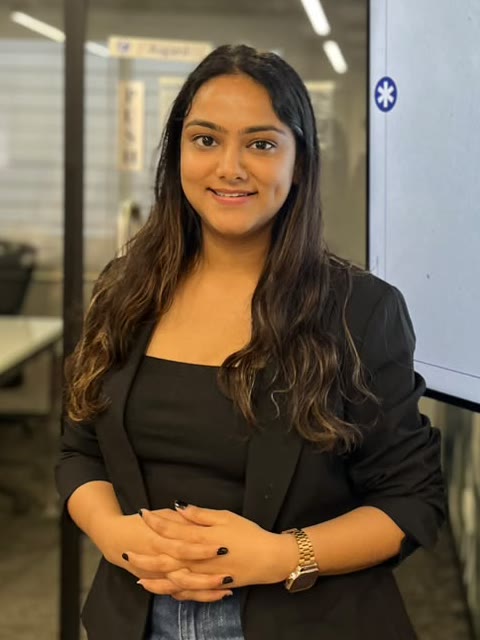
By Shravika Jain, Founder, AlgoRhythm Media, with LAN
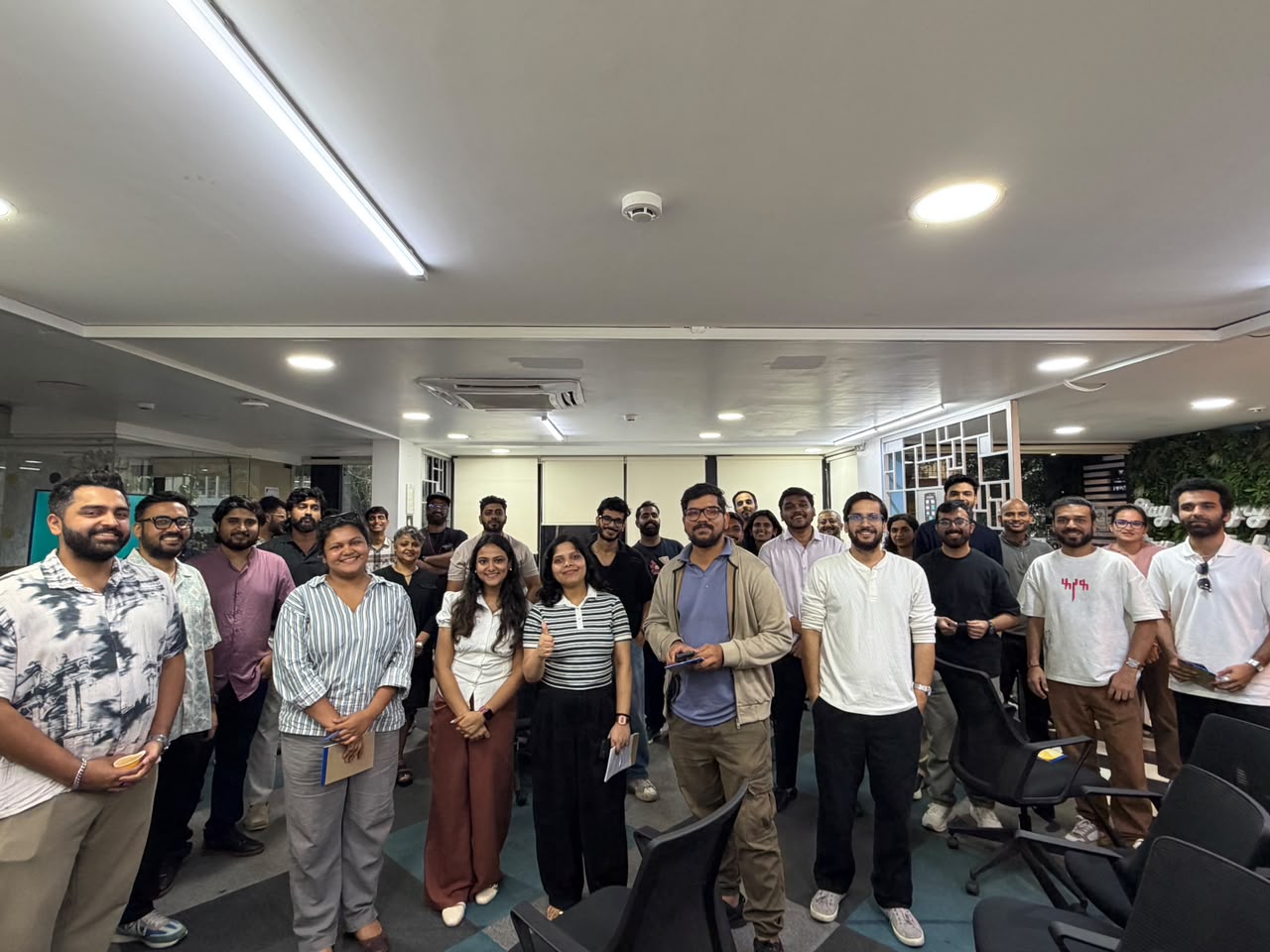
Most founders know they should be posting. Few know what to post, where, or how to tell if it's working.
Shravika's system answers all three, and then takes the writing off your plate. Grab her prompt, or read on for how it works.
Free prompt
The AI Content Engine
Shravika's prompt makes Claude your build partner. It sets up a system on your computer that turns your recorded calls into an idea bank in Obsidian, and leaves the best ideas waiting for you every morning. No code from you.
- Pulls your call transcripts · new Fathom meetings, originals saved first
- Splits each call into ideas · one note per idea, filed by content pillar
- Keeps insights, drops event recaps · "what happened" never becomes a post
- Learns your voice · from an export of your old X/Twitter posts
- Leaves a digest at 8 AM · the best new ideas, quotes and follow-ups
- 1Copy the prompt.
- 2Open the Claude desktop app (Pro or Max) and paste it in.
- 3Follow its steps: it checks your setup, connects Fathom, and tests on one call first.
Want the slides too? Shravika's workshop deck ↗
See the prompt
# PROJECT: PERSONAL AI CONTENT INTELLIGENCE SYSTEM

You are my technical implementation partner. I am a non-technical founder and marketer. I do not want to learn programming or manually operate complicated tools.

Your job is to BUILD a working system on my computer that converts my Fathom meeting recordings and transcripts into a searchable, contextual Idea Bank in Obsidian.

Do not stop at explaining the architecture, writing a plan, or generating sample code. Inspect the environment, implement the system, test it, and help me get it running. You should do as much of the work as your available permissions allow.

Explain any action you need from me in simple, non-technical language. Ask me only for information, account access, or approvals that are genuinely necessary.

## 1. THE OUTCOME

I want a personal AI system that automatically:

1. Retrieves new meeting transcripts from Fathom.
2. Saves the original transcripts and meeting metadata as Markdown files.
3. Understands the meeting using my personal, professional, business, and client context.
4. Extracts strong content ideas, opinions, stories, lessons, examples, frameworks, and useful quotes.
5. Stores each idea as an individual Markdown file in my Obsidian vault.
6. Updates relevant company, client, project, and personal context when new information is discussed.
7. Tracks action items, decisions, commitments, and follow-ups.
8. Identifies patterns across different meetings rather than looking at every call in isolation.
9. Creates a daily digest containing the best new insights, content opportunities, changes, and pending actions.
10. Runs automatically every morning without requiring me to manually execute commands.

I want this to work in the background. My job should be to review useful ideas, approve content, and act on important follow-ups.

## 2. TECHNICAL APPROACH

Preferred stack:

- Fathom: source of meeting transcripts and recordings.
- Claude Code: implementation, processing logic, and AI-assisted analysis.
- Obsidian: my knowledge base, stored as ordinary Markdown files.
- Fathom's official API or supported webhooks: meeting retrieval.
- A reliable local scheduler or supported hosted scheduler: recurring automation.
- A secure way to store credentials.

Do not introduce n8n, Supabase, a custom web application, or unnecessary paid services unless you can demonstrate that a specific requirement cannot be met with the simpler approach.

First inspect my computer and determine:
- Whether Claude Code is working.
- Whether Obsidian is installed.
- Whether I already have an Obsidian vault.
- Whether the necessary tools are installed.
- Whether a suitable Fathom API integration is available.
- Whether the computer can run scheduled tasks reliably.

Use official documentation to verify current API capabilities and authentication requirements. Do not assume an endpoint, API field, webhook event, or permission exists without checking.

Prefer the simplest architecture that is reliable, secure, and maintainable.

If an existing vault is available, use it rather than creating a competing knowledge base. Never overwrite or reorganize my existing notes without permission.

## 3. FATHOM INGESTION

Connect to my Fathom account through its supported API or webhook functionality.

The system must:

- Retrieve all accessible new meetings and their transcripts.
- Retrieve historical meetings when I approve a backfill.
- Preserve meeting titles, dates, participant names, transcript text, speaker attribution, timestamps, summaries, and recording links wherever available.
- Save the original transcript before attempting AI extraction.
- Handle pagination and long transcripts.
- Detect duplicate meetings using stable Fathom meeting IDs.
- Retry temporary failures without creating duplicate records.
- Keep a processing log.
- Allow failed meetings to be processed again.
- Never silently discard a transcript.
- Distinguish a missing transcript from an empty transcript.
- Respect account permissions and any API limits.

Do not scrape private pages or bypass authentication. If an API limitation prevents a feature, explain the limitation and offer the simplest supported alternative.

For historical import, start with a small sample. Show me the result before processing my entire archive.

## 4. OBSIDIAN VAULT STRUCTURE

Create the following structure inside my existing vault, or create a new vault only if necessary and approved.

00 Dashboard/
- Daily Dashboard.md
- System Status.md

01 Meetings/
- One original transcript file per meeting.

02 Idea Bank/
- Personal/
- Expertise/
- Social Proof/
- Trending/
- Opinion/
- Stories/
- Frameworks/
- Experiments/

03 Context/
- My Profile.md
- Writing Style.md
- Businesses and Projects.md
- Clients/
- Audience and Content Goals.md
- Good Insight Examples.md
- Current Priorities.md

04 Daily Insights/
- One dated digest per day.

05 Action Items/
- Open Actions.md
- Completed Actions.md

06 Content Pipeline/
- Inbox/
- Approved/
- Drafts/
- Published/

07 System/
- Processing Log.md
- Automation Settings.md
- Error Log.md

Use sensible filenames and Obsidian links between records. Adapt this structure to an existing vault if needed.

Do not create empty files that serve no purpose. Keep the workspace clean and easy to navigate.

## 5. MEETING NOTE FORMAT

Each meeting note should contain:

- Meeting title.
- Date and time.
- Participants.
- Client or project, when identifiable.
- Fathom recording URL.
- Original transcript.
- Summary.
- Important decisions.
- Action items and their owners.
- Commitments and deadlines.
- Questions that remain unresolved.
- Ideas extracted.
- Links to related meetings, projects, people, and idea notes.
- Processing status.

Preserve the original transcript. Never replace the source material with an AI summary.

## 6. IDEA EXTRACTION

Extract individual ideas, not merely meeting summaries.

For every useful idea, create a separate Markdown file with:

- A clear, specific title.
- The underlying idea in plain English.
- The category.
- Why it is interesting or useful.
- The exact supporting quote from the source transcript.
- The speaker and timestamp, when available.
- A link to the original meeting.
- Relevant people, businesses, clients, or projects.
- Potential content angles.
- Suggested platforms: X, LinkedIn, Instagram, or newsletter.
- A confidence score as a rough prioritization signal, not proof of truth.
- A review status.
- Tags and related ideas.
- Any factual verification or privacy concerns.

Use these categories:

PERSONAL
Experiences, failures, lessons, turning points, founder stories, and observations from real life.

EXPERTISE
Practical knowledge, strategies, frameworks, processes, explanations, and professional lessons.

SOCIAL PROOF
Verified results, metrics, experiments, customer outcomes, case studies, and evidence. Never invent or exaggerate numbers.

TRENDING
References to current events, emerging technologies, industry changes, and timely discussions. Verify whether something is actually current before labeling it time-sensitive.

OPINION
Beliefs, disagreements, contrarian takes, predictions, arguments, and strong points of view.

STORIES
Narratives with a situation, conflict, decision, consequence, or lesson.

FRAMEWORKS
Repeatable methods, checklists, mental models, and processes.

EXPERIMENTS
Tests, hypotheses, things tried, results, and lessons learned.

An idea may have multiple tags, but assign one primary category.

## 7. THE MOST IMPORTANT RULE: INSIGHT VERSUS EVENT

I specifically want you to distinguish a genuinely useful insight from a record of something that happened.

An EVENT answers:
- What happened?
- Who attended?
- What did someone do?
- What was discussed?

An INSIGHT answers:
- Why did this happen?
- What does it reveal?
- What is surprising or non-obvious?
- What general principle can someone learn?
- What assumption does it challenge?
- What can another person apply?
- What evidence supports this conclusion?

For example:

Event:
"I spoke to a founder who is struggling to get leads from LinkedIn."

Weak takeaway:
"LinkedIn is important for founders."

Stronger potential insight:
"Founders often judge LinkedIn by follower growth when the more useful question is whether the right buyers are starting conversations."

The stronger version is only valid if the transcript supports that interpretation. Do not attribute an AI-generated conclusion to a speaker as a verbatim quote.

Another example:

Event:
"A client received a large number of impressions on a post."

Weak takeaway:
"The post went viral."

Stronger potential insight:
"The post may have worked because it framed a familiar problem in a way the audience had not considered."

This is a hypothesis until there is evidence about why the post performed.

For each candidate idea, ask:

1. Is it specific?
2. Is it supported by the source?
3. Does it explain something, challenge an assumption, or offer a useful lesson?
4. Is it distinct from generic advice?
5. Could it become a useful piece of content?
6. Is the reasoning genuinely present, or did you invent it?

Score ideas on specificity, novelty, usefulness, evidential support, and content potential.

Do not confuse confidence with insight quality. Keep those assessments separate.

If a call contains no meaningful insight, say so. Do not manufacture ideas just to fill the database.

## 8. MY CONTEXT AND MEMORY

Maintain a useful, organized knowledge base about me, my work, my businesses, and my clients.

When new information appears in a meeting:

- Update the relevant context file.
- Add the source meeting link and date.
- Preserve historical information when facts change.
- Distinguish confirmed facts from hypotheses.
- Avoid duplicating existing context.
- Track changing priorities, commitments, client status, and project developments.
- Do not turn a temporary statement into a permanent preference.
- Flag ambiguous or contradictory information for review.
- Do not infer sensitive personal information.

Maintain a concise current-state summary for efficient processing. Do not feed every historical note into every model request. Retrieve only the context relevant to each meeting and its ideas.

Keep my personal information separate from client information. Do not expose one client's confidential information in another client's context or in public content suggestions.

## 9. WRITING STYLE AND CONTENT GENERATION

Learn my writing style from a historical export of my X/Twitter posts, which I will provide if available.

Use my writing samples to learn:
- Sentence length and rhythm.
- How I open posts.
- My level of directness.
- How I use observations, stories, and opinions.
- How I explain business concepts.
- My vocabulary and natural voice.
- What makes a thought sound authentic rather than generic.

Do not simply copy my old posts. Learn the underlying style.

My preferred writing style:
- Simple language.
- Short sentences.
- Conversational and direct.
- Subtle wit when natural.
- Raw, honest founder perspective.
- Clear opinions backed by reasoning.
- No forced friendliness.
- No generic marketing language.
- No empty motivational advice.
- Avoid phrases like "dive into" and "unleash your potential."
- Avoid unnecessary em dashes.
- Do not exaggerate achievements or make unsupported claims.
- Do not make everything sound polished, corporate, or AI-generated.

For now, the system should extract and organize ideas, not automatically publish content.

It may suggest possible hooks, angles, and formats. Keep complete drafts in a separate review queue, and only generate them when I ask or explicitly enable that feature.

## 10. DAILY AUTOMATION

Every morning, run the following sequence:

1. Retrieve new or newly available Fathom transcripts since the last successful run.
2. Deduplicate and save original transcripts.
3. Extract ideas, decisions, commitments, and action items.
4. Update relevant business, client, project, and personal context.
5. Identify recurring themes across recent meetings.
6. Compare new ideas against existing ideas to reduce duplication.
7. Create a dated Daily Insights file.
8. Update the dashboard and processing log.
9. Report failures clearly.

The daily digest should include:

- The strongest new ideas.
- Why each idea is worth considering.
- Supporting quotes and source links.
- New opinions or stories worth developing.
- Recurring patterns across conversations.
- Important client or project updates.
- New action items, deadlines, and commitments.
- Changes to previously recorded context.
- Ideas requiring verification or human review.
- A short list of recommended next actions.

Prioritize quality over quantity. A short digest with three excellent ideas is better than 30 generic observations.

Schedule this to run every morning at 8 AM local time if the environment supports it.

If a local Mac scheduler is used, explain that the computer may need to be awake and connected to the internet. Do not promise background execution if the machine will be unavailable. Recommend a hosted option only if local scheduling cannot meet the requirement.

Avoid repeatedly processing the entire archive. Track successful runs and use incremental processing.

## 11. HISTORICAL X/TWITTER IMPORT

If I provide an export of my previous posts:

- Import it as a writing reference.
- Preserve original text and available dates.
- Separate original posts from reposts, replies, and threads when the export allows.
- Identify representative examples of my strongest writing.
- Build a concise Writing Style guide from evidence.
- Keep the original archive intact.
- Do not treat old opinions as current beliefs without checking context.

If no export is available, create the writing-style structure and ask me for examples later.

## 12. SECURITY AND PRIVACY

- Never ask me to paste passwords or secret API keys into chat or Markdown files.
- Use secure credential storage, environment variables, or the official authentication flow.
- Never commit credentials to Git.
- Add appropriate secret files to .gitignore.
- Do not upload my entire Obsidian vault to a remote service.
- Send only the necessary transcript and relevant context for each AI task.
- Keep a record of which services receive transcript data.
- Never automatically publish or share confidential meeting content.
- Keep potentially sensitive ideas in review status.
- Do not delete existing files or modify unrelated system settings without my permission.
- Ask before enabling an automation that sends data externally, changes account settings, or incurs a new recurring cost.
- Validate webhook signatures if webhooks are used.
- Respect recording consent, contractual restrictions, and access permissions.

## 13. IMPLEMENTATION METHOD

Work in this order:

PHASE 1: INSPECT
Inspect my computer and relevant project folders. Identify what is already installed and what access is missing.

PHASE 2: PLAN
Create a short implementation plan with the required integrations, any costs, and any decisions that genuinely require my input.

PHASE 3: BUILD THE FOUNDATION
Create the vault structure, templates, context files, and processing logic.

PHASE 4: CONNECT FATHOM
Implement transcript retrieval using verified official API capabilities. Help me authenticate securely.

PHASE 5: PROCESS ONE REAL MEETING
Process one meeting end to end. Show me the transcript file, extracted idea files, context updates, and daily digest. Wait for my feedback before bulk processing.

PHASE 6: IMPROVE QUALITY
Use my feedback to refine the extraction rules. Ensure ideas are grounded in actual statements and that event summaries are not mislabeled as insights.

PHASE 7: BACKFILL HISTORY
Import older meetings in manageable batches, with duplicate detection and recovery from failures.

PHASE 8: AUTOMATE
Configure the daily schedule, logging, retries, and system-status reporting.

PHASE 9: TEST
Test duplicate handling, empty transcripts, long transcripts, API failures, invalid model responses, permission errors, and reruns.

PHASE 10: HAND OVER
Give me a plain-English summary of what works, where my files live, how the daily automation runs, what it costs, and how I can pause or resume it.

## 14. HOW TO WORK WITH ME

I am not a developer.

Do not ask me to manually write code, debug stack traces, or choose between technical implementation details unless absolutely necessary.

Prefer handling technical work yourself. When an action requires me, give me one simple step at a time with the exact screen or button to use.

Do not claim that a feature works until you have tested it.

If a permission, subscription, API limitation, or external account blocks progress, explain exactly what is blocked and what I need to do.

Do not stop after creating files. Continue until the workflow is working or a genuine external dependency prevents further progress.

Start by inspecting my current environment. Then tell me the single most important thing you need from me, if anything, and proceed with all independent work.
What the AI content engine costs to run
Mostly tools you already pay for (from Shravika's deck).
| Tool | Job | Cost |
|---|---|---|
| FathomRecords calls; its API hands over transcripts | Records calls; its API hands over transcripts | API included on all plans |
| Claude Pro or Max + Claude CodeReads transcripts, finds ideas, writes tweets | Reads transcripts, finds ideas, writes tweets | Your existing plan, no API key |
| Claude desktop appBuilds the whole thing on your Mac for you | Builds the whole thing on your Mac for you | Free with your plan |
| ObsidianWhere ideas and tweets live, as plain notes | Where ideas and tweets live, as plain notes | Free |
| A Mac or Windows computer that's on (asleep is fine)Runs the 8 AM job | Runs the 8 AM job | No extra cost |
01
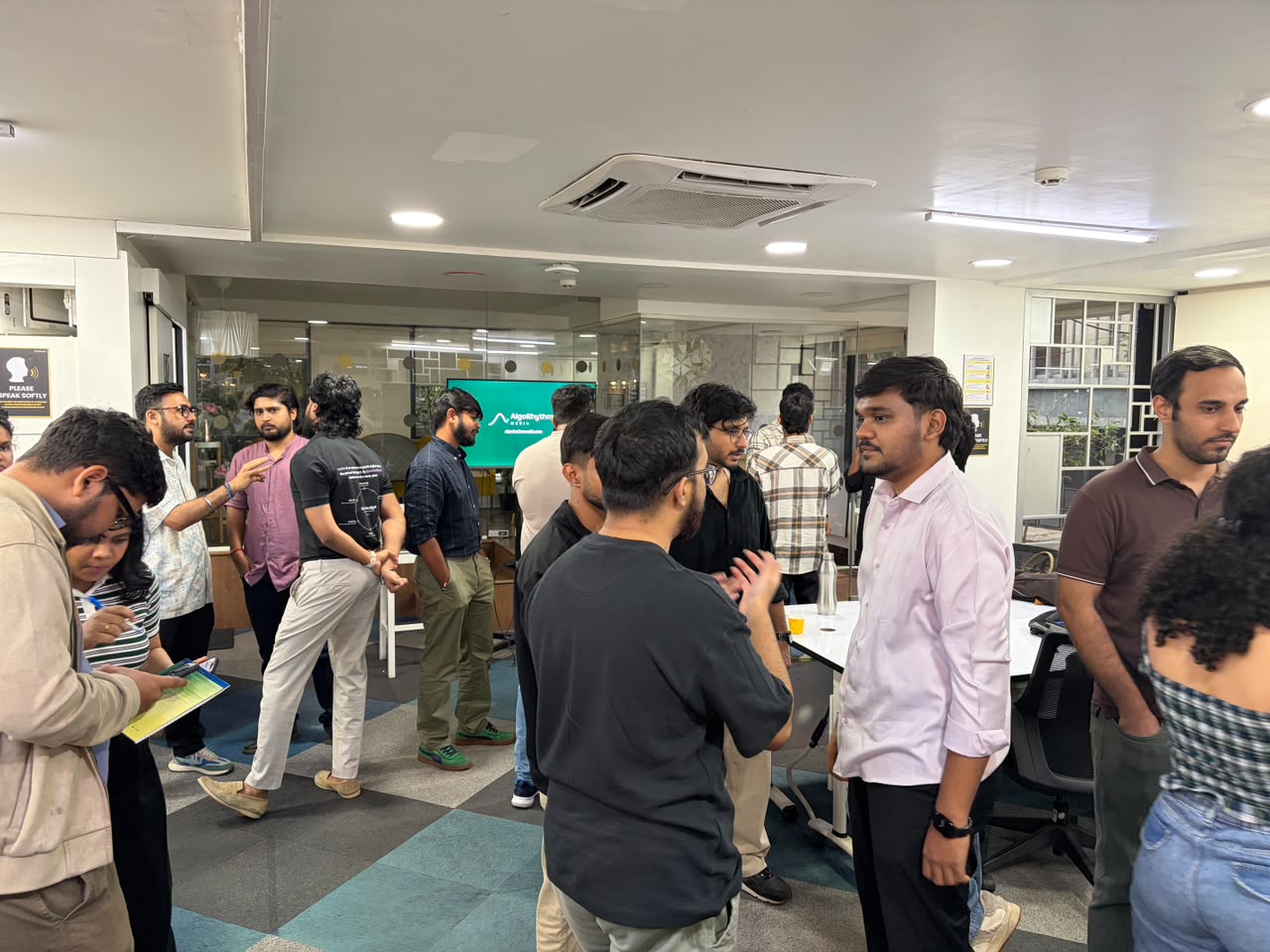
What should your personal brand do in the next 6 months?
Shravika opened with three questions most founders can't answer cleanly, then a four-part engine that turns the answers into a plan.
- Start with three honest checks. Why do people who are great at brand and marketing still fail at their own personal brand? Which five words do people already associate with you? If someone needed exactly what you offer today, would your name come up?
- Answer four questions and you have the engine: what do I want to achieve (goal), who can help me achieve it (audience), what should they know me for (positioning), and what can I consistently do with the resources I have today (strategy and distribution).
- Set the goal for the next 6 months, not for life, and plan around the last question: what you can keep doing every week with the time and help you have now.
02
How to pick a persona you can actually keep up
A persona only works if you can sustain it. Shravika's NISC filter keeps it to something that is already yours.
- Run every persona idea through NISC: is it Natural to you, Interesting to you, Scalable for you, and Connected to your goals? Drop the ones that fail any of the four.
- Look at how well-known founders split it. Kunal Shah is known for how he thinks, Nikhil Kamath for how he operates, Raj Shamani as the interviewer. Pick the lane that matches how you already work.
- Check it's landing by asking your followers three things: how do I think, what do I care about, and what can you learn from me?
- Turn your own stories into posts with a four-step chain. Story: we lost a customer after months of working together. Opinion: churn isn't always a product problem, sometimes it's a communication problem. Insight: we weren't showing the customer the progress we were making. Repeatable format: lessons from running a company that other founders can learn from.
03
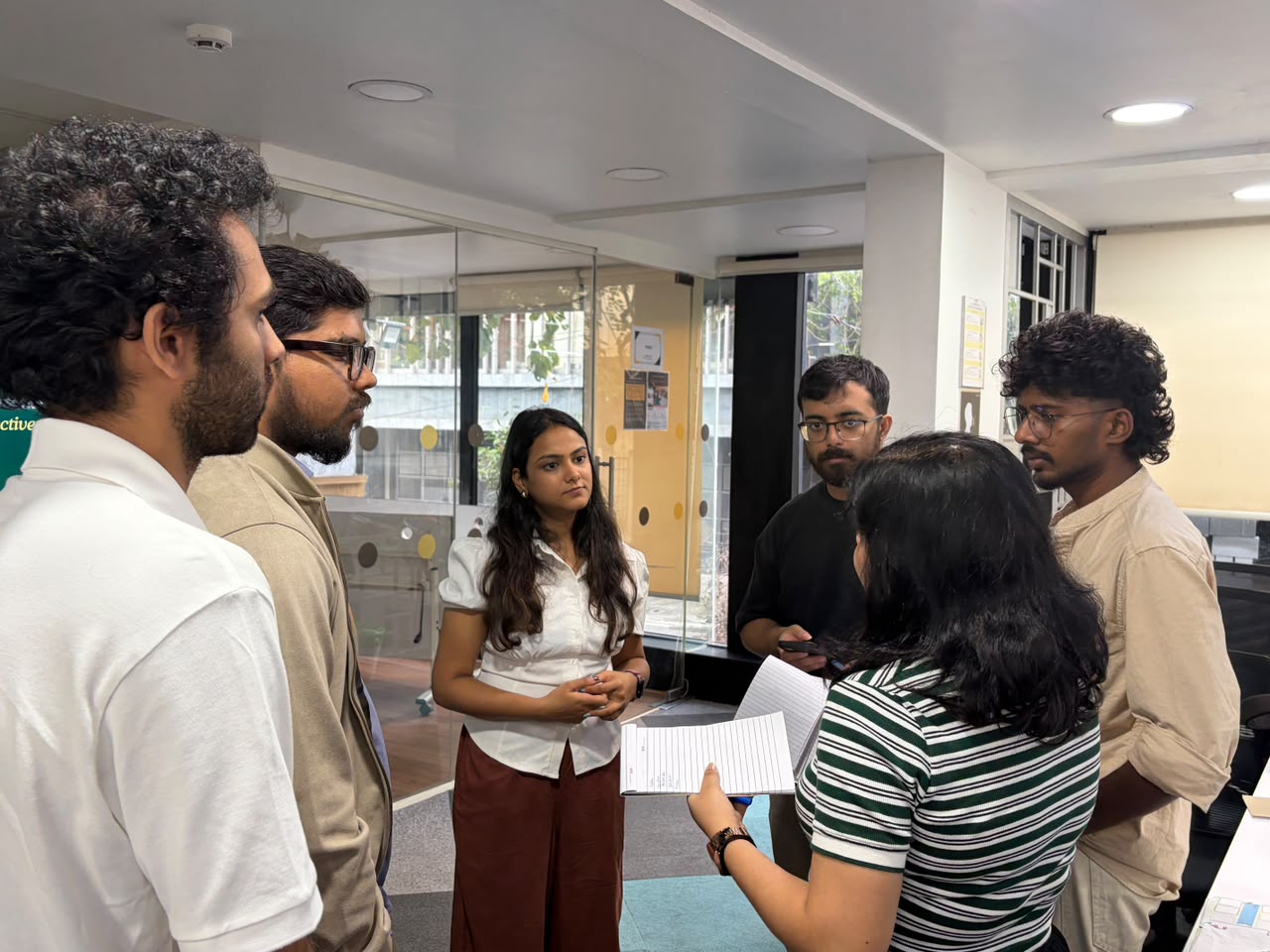
What to post: five content pillars and the TOFU, MOFU, BOFU mix
Every post does one of three jobs: bring views, build an audience, or bring business. Plan the week so all three happen.
- Use five pillars: personal stories, expertise, social proof, trending topics and opinions.
- Map them to the funnel. Personal stories, trending topics and opinions are TOFU: they bring views. Expertise is MOFU: it builds the audience. Social proof and case studies are BOFU: they bring business.
- TOFU never goes away. At four posts a week, if you need business, post two MOFU, one BOFU and one TOFU. If you need visibility, flip it: two TOFU, one MOFU and one BOFU.
- Run a mix for a month, then look at what it brought in and rethink it.
| Pillar | B2B founders | Agency owners | Marketers |
|---|---|---|---|
| Personal storiesTOFU | Why I started my company | How I landed my first client | A campaign that failed |
| ExpertiseMOFU | GTM strategies and product lessons | Client acquisition and agency systems | Content and distribution strategies |
| Social proofBOFU | Customer wins and revenue milestones | Client results and case studies | Campaign results and experiments |
| TrendingTOFU/MOFU | AI developments in my industry | Viral campaigns and new marketing tools | Trending brand campaigns and AI tools |
| OpinionsTOFU/MOFU | Why most B2B startups struggle with distribution | Why more clients don't always mean more profit | Why views don't equal business impact |
04
Which platform should a founder start with?
Pick one platform and go deep. Add a second only once the first is compounding.
- Match the platform to what you're naturally good at. Short, sharp opinions suit X (Twitter). Professional expertise suits LinkedIn. Visual communication suits Instagram. Detailed explanations suit YouTube.
- Then test the content that fits that strength: observations, hot takes and reactions on X; case studies, lessons and founder stories on LinkedIn; short videos, carousels and behind-the-scenes on Instagram; tutorials, deep dives and longer stories on YouTube.
05
How to get your content seen without paying for it
Don't only publish to your own audience. Show up where the audience you want already is.
- Join other people's conversations: comment on and quote posts in your niche, even if it's only two comments a day, and do one networking call a day.
- Collaborate with creators and brands. Early on, micro creators are enough. A creator-seeding campaign Shravika ran for an AI kitchen manager app got about 120K views for roughly ₹20,000 to ₹30,000.
- Get into listicles. One listicle closed a $17,000 deal.
- Use account-based marketing: pick the specific companies you want as clients and aim your content and outreach at the people inside them.
06
When should a founder pay to distribute content?
Ads work better once a personal brand exists. Spend in stages, not on day one.
- Stage 1: learn organically. Stage 2: identify what works. Stage 3: amplify it with ads, creators or communities.
- Founder-led posts can run as LinkedIn Thought Leader Ads, so content that already works organically becomes the ad.
- What to spend on depends on where you are. Shravika's breakdown by situation is below.
| If you're | Organic | Paid |
|---|---|---|
| Early-stage founders | Founder stories, lessons and build-in-public updatesPaid: Niche newsletter sponsorships, targeted ads, launch campaigns | Niche newsletter sponsorships, targeted ads, launch campaigns |
| B2B SaaS | Founder-led LinkedIn posts, SEO, communities, customer storiesPaid: LinkedIn Thought Leader Ads, account-based marketing, paid newsletters | LinkedIn Thought Leader Ads, account-based marketing, paid newsletters |
| Agencies and consultants | Thought leadership, case studies, strategic commenting, referralsPaid: Paid lead generation, sponsored content, creator partnerships | Paid lead generation, sponsored content, creator partnerships |
| New product launches | Teasers, founder storytelling, community engagement, Product HuntPaid: Paid launch campaigns, influencer partnerships, sponsored placements | Paid launch campaigns, influencer partnerships, sponsored placements |
| Limited budgets | Organic content, networking, SEO, community participationPaid: Small, targeted campaigns once the offer and audience are validated | Small, targeted campaigns once the offer and audience are validated |
| Need leads quickly | Founder content, customer proof, referrals, useful resourcesPaid: Targeted ads, paid partnerships, sponsored placements | Targeted ads, paid partnerships, sponsored placements |
| High-ticket businesses | Expertise-led content, case studies, webinars, referralsPaid: Targeted advertising, sponsored events, strategic partnerships | Targeted advertising, sponsored events, strategic partnerships |
07
How to measure a personal brand: the follower-to-call ratio
Views and followers don't pay the bills. Track the whole path: content, profile visits, followers, DMs, calls booked.
- Shravika's worked example: 100K content views became 1,000 profile visits (1%), 500 followers (half the visitors) and 5 booked calls. That's one call for every 100 followers.
- For agency owners, a good ratio is about one call per 50 followers.
- Who does the work depends on your setup. Solo: build an agent to do it. Have a team: record your conversations and hire somebody who's chronically online.
100K
content views
1,000
profile visits
500
followers
5
calls booked
08
The AI content engine: posts drafted from your calls by 8 AM
Your best ideas already come up out loud: on customer calls, in meetings, in voice notes. The engine catches them.
- Record every call (customer, networking, internal) with Fathom or Fireflies.
- Run each idea through four steps: capture it in a central idea bank, match it to a content pillar, choose the format (text post, carousel, video, case study or thread), and draft it with a repeatable structure: hook, context, insight, takeaway.
- The stack: Fathom for transcripts, Claude Pro with the Claude desktop app to read them and write, and an Obsidian vault where ideas and drafts live as plain notes. Write a one-page brief and a context file about you, hand both to Claude, connect Fathom with its API key, and test on one call before anything else.
- Every morning at 8 AM, Claude drops fresh tweet and LinkedIn drafts into the vault. You lightly edit them and schedule them for the day.
- The rule that makes it work: separate insights from events. "I spoke to a founder who is struggling to get leads from LinkedIn" is an event. "Founders often judge LinkedIn by follower growth when the more useful question is whether the right buyers are starting conversations" is an insight. Only insights become posts.
Common questions
How do I build a personal brand as a founder?
Decide what you want it to do in the next 6 months, who can help you get there, and what you want to be known for. Pick a persona that passes NISC (natural, interesting, scalable, connected to your goals), post a weekly mix of TOFU, MOFU and BOFU content on one platform, join other people's conversations every day, and measure it by how many followers it takes to book one call.
How often should a founder post on LinkedIn?
Shravika planned the mix around four posts a week. If you need business: two expertise posts, one social-proof post and one story, trend or opinion. If you need visibility: two story, trend or opinion posts, one expertise and one social proof. Run it for a month, then adjust.
What is the TOFU, MOFU, BOFU mix for personal branding?
TOFU (personal stories, trending topics, opinions) brings views. MOFU (expertise) builds an audience. BOFU (social proof and case studies) brings business. TOFU never goes away; you shift the balance between the three depending on whether you need reach or revenue.
Should I start on LinkedIn or X (Twitter)?
Start where your strength is. Short, sharp opinions suit X. Professional expertise, case studies and founder stories suit LinkedIn. Go deep on one and add a second only once the first is compounding.
How do I know if my personal brand is working?
Track the follower-to-call ratio: how many followers it takes to book one call, following the path content, profile visits, followers, DMs, calls booked. For agency owners, about one call per 50 followers is good.
When should I start running ads on founder content?
After you've learned organically and identified what works. Ads work better once a personal brand exists, and founder-led posts that already perform can run as LinkedIn Thought Leader Ads.
Can AI write my LinkedIn posts without sounding like AI?
It can if it works from your own material. The engine drafts from transcripts of your real calls, learns your style from your past posts, and only turns insights (not event recaps) into drafts. You still edit and schedule every post yourself.
What does the AI content engine cost to run?
Fathom's API is included on all its plans. Claude Pro or Max with the Claude desktop app uses the plan you already have, no API key. Obsidian is free. All you need on top is a Mac or Windows computer that's on (asleep is fine) to run the 8 AM job.
How do I use SEO keywords in personal brand content?
Shravika's short answer in the room: use trending keywords in TOFU posts, and the language your buyers use for your expertise in MOFU posts.